Gifts for Aquascapers
A stone moves half an inch and suddenly the path through the tank looks like it goes somewhere. If they call you over to look, take the seat they usually sit in. The view from there is what they have been making. This guide to gifts for aquascapers follows a planted tank from the empty glass to the first shrimp.
See also: Isopods and terrariums Gardeners Homebodies Miniature painters
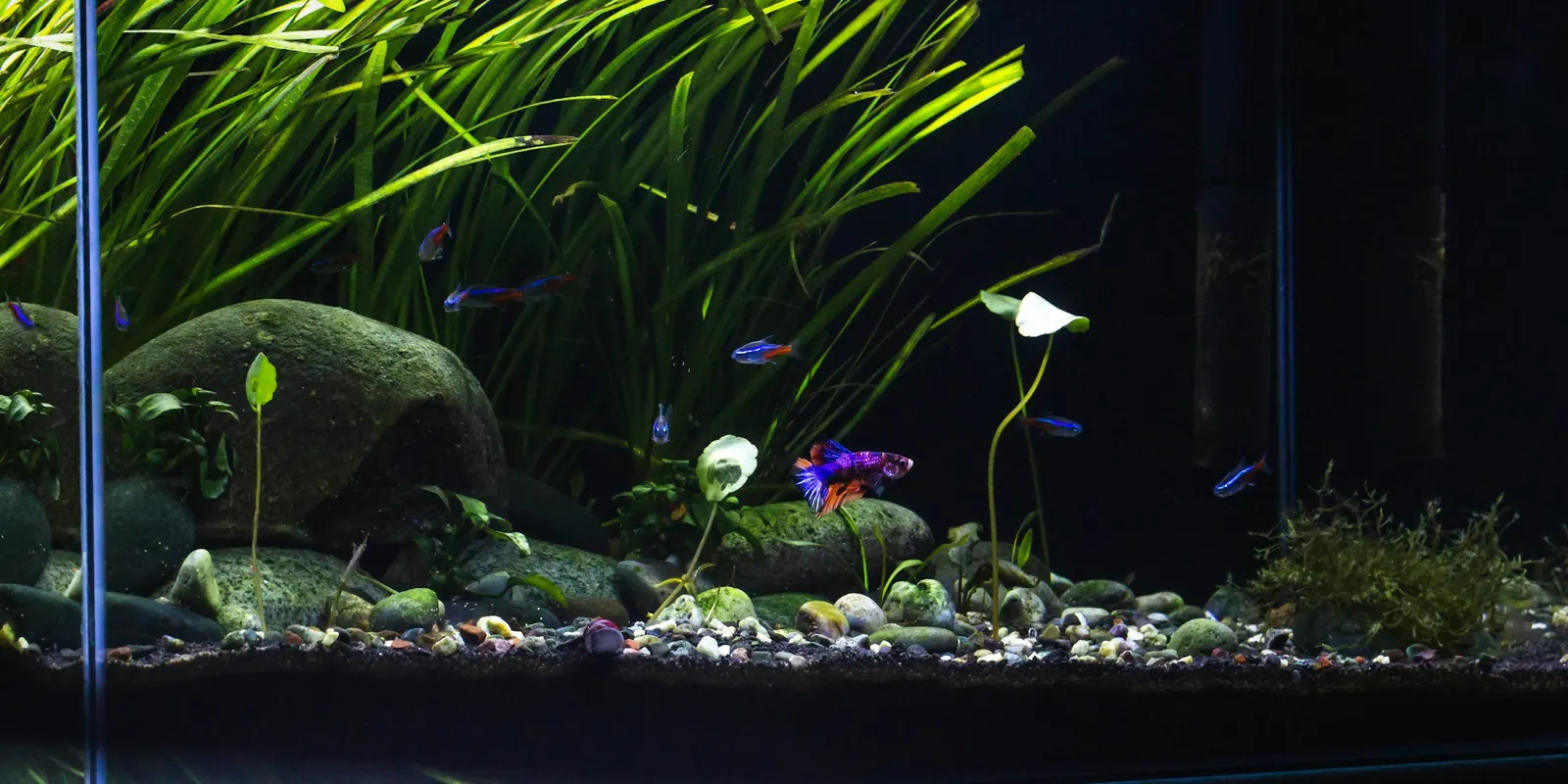
Before you buy
- Ask how big their tank is before buying a light, filter or heater. Most gear is sized by tank length or gallons, and the wrong size is the most common return.
- Do not ship live plants, shrimp or fish as a surprise. They suffer in cold mailboxes, and the keeper may not have a cycled tank ready. Gift the hardware, and let them pick the living parts.
- Big aquarium gear swings in price on Amazon, and some listings come from resellers at well above the usual price. Check the seller before buying the canister filter or the light.
No gifts match. Try another search or increase your budget.
If you buy one thing
-
UNS Ultra Clear Rimless Tank 45U, 9.3 Gallon
Frameless low-iron glass, so plants look true green instead of tinted, in the 45U size most scaping contests use. Check the footprint with them; choosing where the front glass faces is part of the pleasure.
Budget: Splurge $100+ See it on Amazon: UNS Ultra Clear Rimless Tank 45U, 9.3 Gallon (opens in a new tab)
The ground and the bones 3 ideas
Soil feeds the plants; stone and wood give the scape its shape.
-
Ultum Nature Systems Controsoil, Black Fine, 10 Liter
Baked volcanic soil that feeds plant roots and softens the water a little, which shrimp like. The fine grain is easy to plant into, and 10 liters fills a 45U tank with a proper slope.
-
ChaoLeHo Seiryu Stone, 5 lb
Grey, sharp-edged stone with white veins, the rock behind many famous mountain-style scapes. Five pounds of mixed sizes gives them a main stone and smaller ones to build around it.
-
Jorewood Small Spiderwood Driftwood, 8 Pieces
Thin, branching roots that look like a tiny forest once moss grows on them. Soak it for a few days first; it floats at the start and may tint the water tea-brown for a while.
Light 1 idea
Plants grow only as well as they are lit.
-
Chihiros WRGB II Slim 45 LED Light
A thin planted-tank light sized for a 45 cm tank, with red, green and blue channels that make plant colors pop. It sets its own sunrise and sunset from a phone app, so there is no timer to buy.
Budget: Splurge $100+ See it on Amazon: Chihiros WRGB II Slim 45 LED Light (opens in a new tab)
Moving and warming the water 3 ideas
A quiet filter, clear glass pipes and a steady heater keep the tank alive and tidy to look at.
-
Eheim Classic 150 Canister Filter (2211)
A plain German canister filter that sits under the tank and runs nearly silent for years. It takes the 12/16 mm hose that glass lily pipes fit, so the inside of the tank stays clear of plastic.
Budget: Splurge $100+ See it on Amazon: Eheim Classic 150 Canister Filter (2211) (opens in a new tab) -
FZONE 13mm Glass Lily Pipe Kit
Clear glass pipes that replace the filter's grey plastic intake and outlet. They nearly vanish in the water, which is why they show up in almost every show tank photo.
-
Eheim Jager Aquarium Heater, 50W
A glass heater with a simple dial that holds the water steady for tropical plants and fish. Fifty watts suits tanks up to about 15 gallons.
Feeding the plants 3 ideas
Carbon dioxide and fertilizer are what make a tank grow thick and fast.
-
FZONE Pro Dual Stage CO2 Regulator
The step most scapers save up for. Added carbon dioxide makes plants grow thick and red, and a dual-stage regulator keeps the flow steady as the cylinder empties, with a solenoid that a timer can switch off at night.
Budget: Splurge $100+ See it on Amazon: FZONE Pro Dual Stage CO2 Regulator (opens in a new tab) -
FZONE Glass CO2 Drop Checker
A small glass bulb of liquid that turns blue, green or yellow to show how much CO2 is in the water. Green means about right; yellow means the fish are at risk.
Budget: Under $25 See it on Amazon: FZONE Glass CO2 Drop Checker (opens in a new tab) -
NilocG Thrive All in One Liquid Fertilizer, 500 ml
One pump bottle that covers the nutrients plants pull from the water, instead of the three or four bottles a dosing routine can need. A big bottle lasts a small tank most of a year.
Cycling and water care 5 ideas
The weeks before any animal goes in, and the weekly chores after.
-
API Freshwater Master Test Kit
Liquid tests for ammonia, nitrite, nitrate and pH, which are how a keeper knows a new tank has cycled. Liquid drops read more reliably than paper strips, and the kit runs hundreds of tests.
-
Seachem Stability, 250 ml
Bottled bacteria that help a new tank start breaking down waste sooner. It does not skip cycling, but it gives the process a head start.
Budget: Under $25 See it on Amazon: Seachem Stability, 250 ml (opens in a new tab) -
Seachem Prime, 250 ml
A few drops make tap water safe by removing chlorine and chloramine. Every water change needs it, so a fresh bottle never goes to waste.
Budget: Under $25 See it on Amazon: Seachem Prime, 250 ml (opens in a new tab) -
Python No Spill Clean and Fill, 25 Foot
A long hose that hooks to a sink faucet, drains the tank and fills it again with no buckets. It turns the weekly water change from a chore into ten minutes.
-
Flipper Nano Magnetic Aquarium Glass Cleaner
A magnet scrubber that cleans the inside of the glass from outside, then flips to a blade for stubborn spots. The nano size fits thin glass like the 45U.
Tools and reading 3 ideas
Long tools for working inside the glass, and the books that teach the eye.
-
hygger Long Stainless Steel Aquascaping Tools, 4 Pieces
Long straight and curved tweezers, curved scissors and a soil spatula. Planting tiny stems by hand uproots everything else; these reach the back corner without a splash.
-
Aquascaping by George Farmer
A hardcover guide by one of the best-known scapers in the UK, built around real tanks from bare glass to finished layout. Good photos, and honest about what goes wrong.
Budget: Under $25 See it on Amazon: Aquascaping by George Farmer (opens in a new tab) -
Ecology of the Planted Aquarium by Diana Walstad
The science side of the hobby: how plants, soil and bacteria keep a tank in balance. Many keepers run low-tech tanks with no CO2 at all because of this book.
How it comes together
- Set the tank on a level, sturdy stand. Water weighs about 8 pounds a gallon, so even a small tank is heavy when full.
- Pour in the soil, deeper at the back than the front. The slope makes the tank look deeper and gives tall plants room for roots.
- Build the stone and wood while the tank is dry. Place the biggest rock first, then step back and judge it from the front.
Spray the soil damp and plant with long tweezers, pushing each stem in at a slant. Short plants go in front and tall stems at the back.
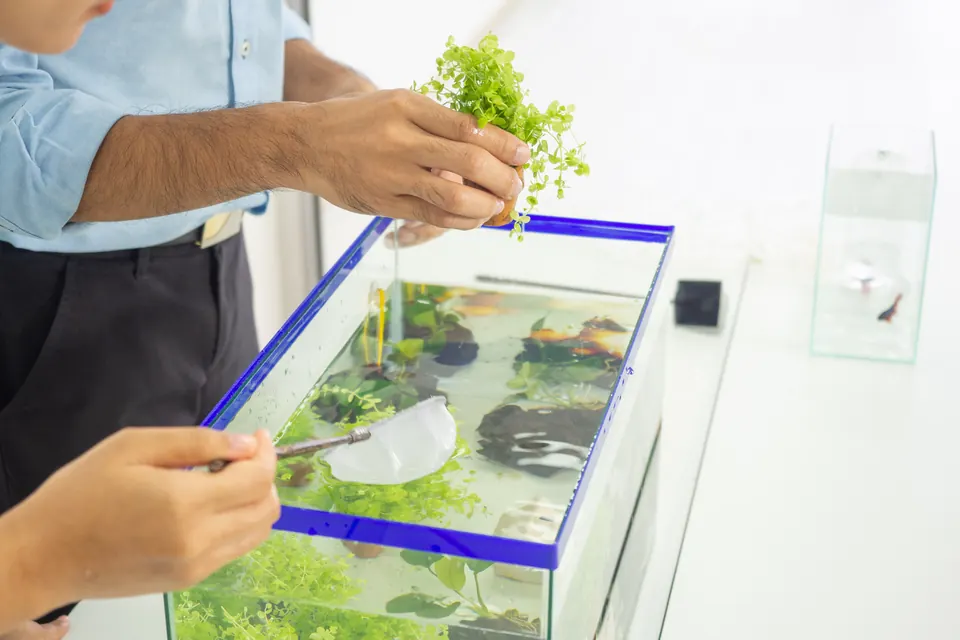
- Fill slowly by pouring onto a plate or a plastic bag, so the soil stays in place. Then start the filter and heater and add conditioner.
Cycle the tank for four to six weeks before any animals go in. Test every few days until ammonia and nitrite both read zero.
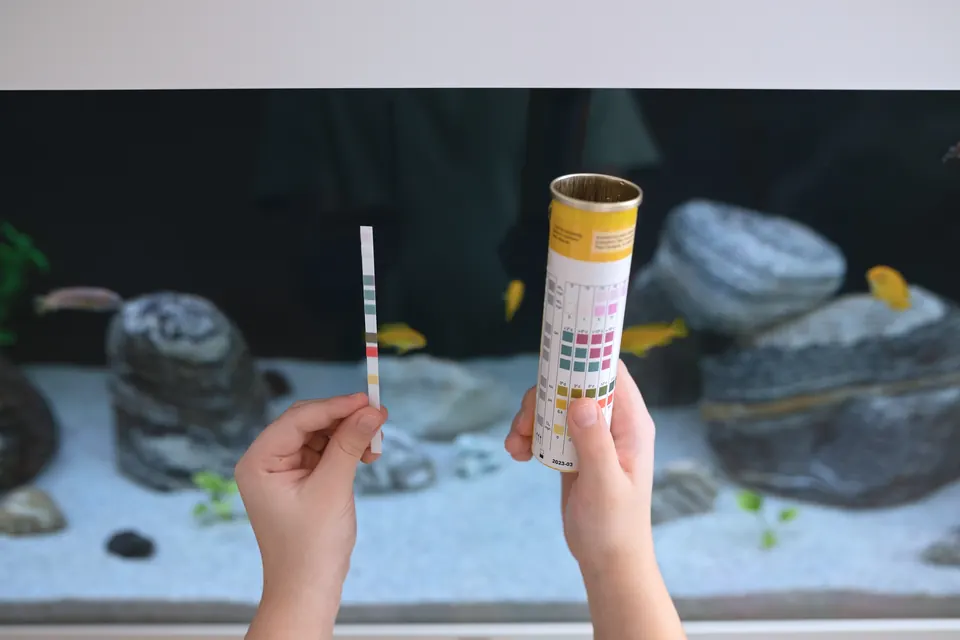
- Keep the light to about six hours a day at first, and change about a third of the water each week while the plants settle.
- Add shrimp or a small school of fish a few at a time, once the tests have stayed clean for a week.
Watch out for
- Fish added to a new tank before it has cycled usually die within days. The waste builds up faster than the young bacteria can clear it.
- Pressurized CO2 can suffocate fish if the flow is set too high or left on at night. Use a drop checker, a timer on the solenoid, and bolt the cylinder upright so it cannot tip.
- A CO2 regulator needs a cylinder, which is not in the box. Most keepers have one filled at a welding or homebrew shop, and the thread must match (CGA320 in the US).
- Too much light with too little CO2 or fertilizer is the usual recipe for algae. Start short and dim, and raise the light slowly.
- Rocks like Seiryu stone can slowly raise the water's hardness. That is fine for most plants and shrimp, but soft-water fish may not like it.